Carlo Petrini died in May. He was 76. The world spent two days writing about Slow Food and McDonald's and the Spanish Steps protest. All of that is worth saying. But what I keep coming back to is a cold Thursday morning in Carrù in December of 1992, standing next to him watching an entire cow's head descend into a stock pot, trying not to let my expression give me away.
He had invited me. Carlo knew an American wine guy coming all the way to Carrù for the Fiera del Bue Grasso was a story — and he wasn't above using it. The local television crew found us within the hour. I said something on camera about what an honor it was to witness something like this. Carlo stood beside me with the expression of a man who had just proved a point to someone who wasn't there. He was right. He usually was.
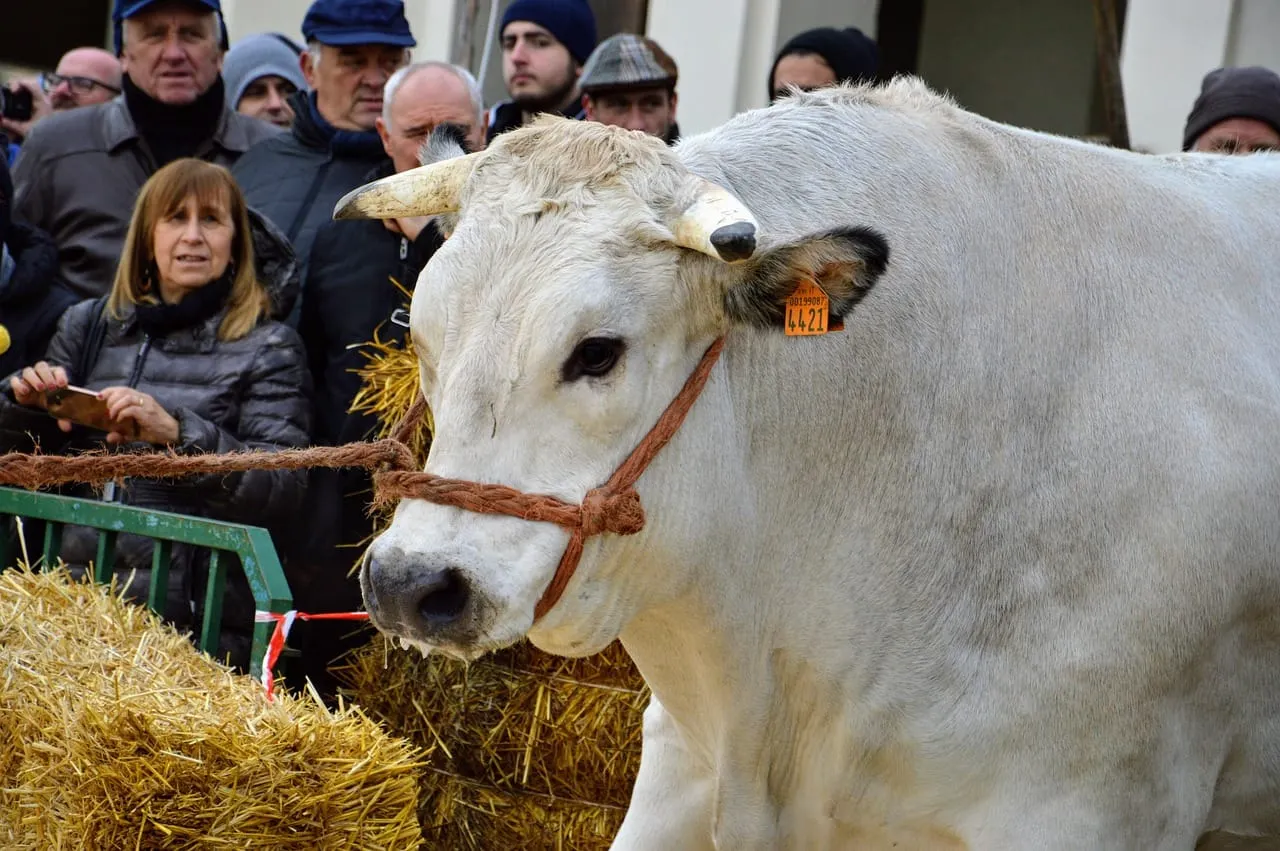
The Fiera is a December festival built around the Piemontese breed — livestock competition, market, bollito misto from early morning until the town runs out of steam. Seven cuts. Seven sauces. The broth ladled into a ceramic bowl, hot enough to steam your glasses, no ceremony. That broth was the thing. Not the spectacle. The broth.
I've been in this trade for nearly four decades. That morning in Carrù changed something. Carlo wasn't a wine critic. He was something more useful: a man who understood that wine and food and the table that holds them are not lifestyle accessories. They are the argument.
LA PAROLA · bollito misto (boh-LEE-toh MEE-stoh) — The grand boiled meat of Piedmont. Not one cut but many: brisket, tongue, head, cotechino, flank. Seven traditional sauces — bagnetto verde (parsley and anchovy), bagnetto rosso (tomato-based), and five more. The dish is the ritual. The broth is the argument.
The Breed, Stateside
The Piemontese ox is not a myth you have to travel to find. Certified Piedmontese (piedmontese.com) raises it on family ranches in the Midwest — source-verified, ranch to fork. The double-muscled genetics carry over: leaner than conventional beef, more tender than the marbling charts suggest. USDA research found it the most tender of eleven breeds tested. You can order it direct. I'm reaching out to them for samples and will report back.
The Wine: Dogliani
Not Barolo. Not Barbaresco. Not even Barbera. The wine that belongs at this table — at the bollito, at the Piemontese steak, at any serious piece of charred beef from this corner of the world — is Dogliani.
Dolcetto is the grape. Dogliani, tucked into the Langhe hills just south of Barolo, is its highest expression — the only Dolcetto appellation to earn DOCG status, and it did so by removing the grape name from the label entirely. You don't call it Dolcetto di Dogliani anymore. You call it Dogliani. That's a statement of confidence.
The name means "little sweet one," which is almost perfectly misleading. Dogliani is dry, dark, structured — black cherry and plum up front, bitter almond and dark chocolate on the finish, a snap of acidity that keeps it honest. The charred crust on a Piemontese steak and the crisp, sappy dark fruit of a proper Dogliani are not two things you're combining. They're one thing. The fat in the beef, the bitterness in the wine, the char that ties them together — it's a straight line.
Poderi Luigi Einaudi is the benchmark producer. Quinto Chionetti's estate runs it close. San Fereolo pushes Dogliani into genuinely serious wine territory — wood-aged, bottled late, built to age. Roughly $20 to $35. You are drinking the real Piedmont, not the Barolo tourist version of it.
Carlo didn't drink expensive wine. He drank the wine of the table — the wine that was there because it belonged there. Dogliani is that wine. It doesn't announce itself. It does its job. It goes with the beef and lets the meal be the point.
He'd have approved.
Somewhere out there is local TV footage from Carrù, December 1992, featuring an American wine guy trying to look like he belongs. If anyone finds it — it's golden.