
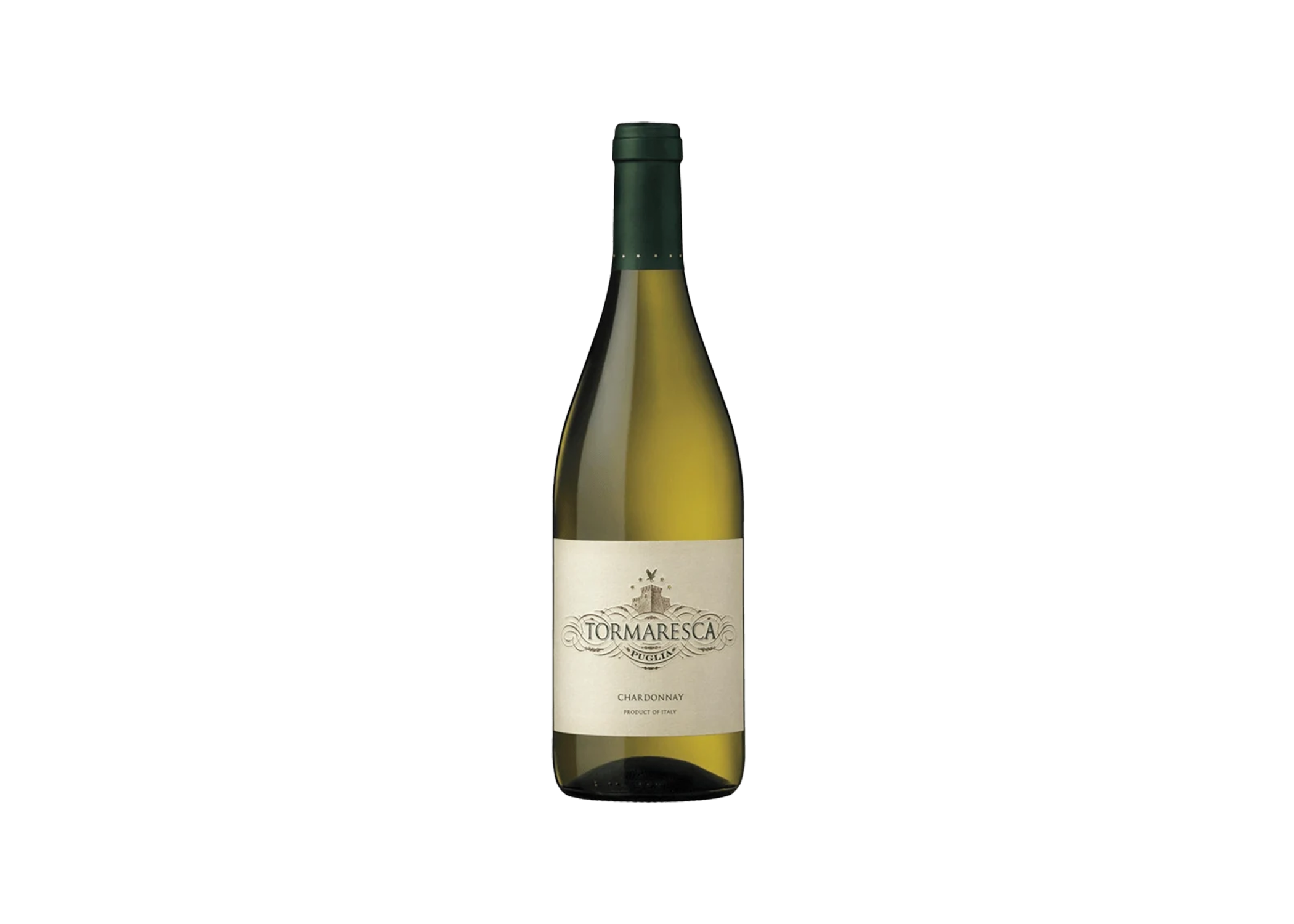
Today we are tasting America’s favorite grape. Yes, it is Chardonnay.
I say America’s favorite grape because up until, I don’t know, probably fifteen years ago now, White Zinfandel outsold everything. It’s been Chardonnay all day for the past fifteen years. America loves Chardonnay.
Why does America love Chardonnay? To me it’s the old adage: Chardonnay is the tofu of wine. It can be any and all things, every day, all day. It can be a little bit sweet. It can be a little bit tart. It can be oaky, it can be unoaked. So no matter what you like, Chardonnay can become that thing. That’s why you see it grown all over the world — probably on five continents. It’s relatively easy to grow, and no disrespect to the grape intended by that.
Where the magic happens, or doesn’t happen, is what you do with Chardonnay after it’s grown. Clearly there are better regions and better locations for it than others. But winemakers love it because you get this blank canvas of a wine and then you get to trick it out — do things to it that a lot of other grapes don’t give you the flexibility to do.
On its own, if you just take some generic Chardonnay and ferment it, it isn’t much. It’s not an aromatic grape, not like Sauvignon Blanc or Riesling where it jumps out of the glass. The flavor profile isn’t all over the board. So where a winemaker can really show what he or she is doing is in the choices — what kind of yeast, what kind of fermentation techniques, what kind of aging.
This is a Chardonnay from Puglia, from the heel of the boot of Italy, from the Tormaresca estate, which is owned by the Antinori family. If you’ve seen other videos, you know I have nothing but mega respect for Antinori. I’ve never had a bad bottle of wine from them.
And Chardonnay coming from Puglia — you might think, whoa, I thought the best white wines in Italy came from northern Italy. Not always true anymore. With the techniques and the technology that have transformed the wine industry over the past twenty or thirty years, you’re starting to see great reds and whites come from all over Italy.
The strides white wine has made in southern Italy in particular have been amazing. In years past, because of the hotter climate, you had a lot of southern white wines — especially Chardonnay — that they would just let hang on the vine for way too long. They’d get overripe, lack acidity, high alcohol. They were basically disasters. But they had a market here in the States, because they resembled a lot of the wines from California. No lack of sunshine in either place.
Then they started to dial that back. Stainless steel. Pick a little bit earlier. Different yeasts. The whole bit. And now you’re starting to see Chardonnay from southern Italy that rivals its likeness in other parts of the world.
So let’s see what’s happening here. This is a ten-to-fifteen-dollar Chardonnay. I’m not expecting Bâtard-Montrachet by any stretch. I’m just looking for an alternative. If you’re somebody who goes to the store and buys Kendall-Jackson or La Crema — boom, here is an example of something you might enjoy just as much, if not better.
On the nose, there is clearly some use of oak here. And butter. Not that they added butter to this bad boy — it’s the yeast and the malolactic fermentation that was used to make this wine. It is very obvious the second I put my nose in the glass.
You can also see it in the color. There’s a little bit of color to this wine. This is the 2024. Just looking at it lets me know there’s probably been some sort of oak treatment, some skin contact, and that malolactic fermentation is going to be apparent. That’s just observing. And then you smell it, and there is butter here.
This reminds me of back in the day when Callaway Chardonnay first came out. If you’re under forty you’ve probably never heard of it or seen it in stores. But that was the era of “we have this new thing called an oak barrel, and this thing called malolactic fermentation, where we can convert things and make it smell like butter instead of green apples.”
So I think that’s what’s going on here. But let me taste it just to confirm.
Okay — I was a little bit wrong, and I’m glad I was wrong. I was really expecting something flabby and buttery, in which case I was going to tell you straight up: not a fan. It has fans in America, because a lot of California Chardonnay, especially in that ten-dollar range, is flabby and buttery. This, surprisingly, is not.
There’s some good acid here. It’s still hanging on the back of my chops. There’s some width to this wine, some breadth that lays across the middle of the palate. The attack has that little bit of ripeness which reads as sweetness, but it’s not a sweet wine. It finishes dry. And again, the acid is hanging with me in the back of my jaws. I’m pleasantly surprised.
I would say La Crema is a little bit more steely than this. This is somewhere in between. I’m not going to say Rombauer, because Rombauer is kind of over the top — Ringling Brothers butter and oak. This finds its way somewhere in the middle. It’s odd, but I kind of like it.
And I drink Chardonnay — I might have a glass a year, just because there’s so much other stuff, especially from Italy, for me to drink when I want white wine. So Chardonnay doesn’t find its way into my glass much. It is what it is. There are options. That’s the whole point of this thing.
Nose back in here: there are definitely some oak treatments, some toast. Just toasted oak on the nose. But it’s got some staying power in the mouth. And that acid is no fluke. It’s there. It’s fresh.
With a fatty fish you could do this, because there is some texture to this wine and there is some acid. So I want some fatty fish. If I’m doing a grilled white fish, something delicate like sole, I think this might overpower it — I’d shy away from that. But if you’re doing tuna, or something meatier like grouper or swordfish, you’re perfectly good to go. Roast chicken, grilled chicken, you’re fine right here.
So am I going to go out and buy this wine for fifteen bucks? No, because I don’t do Chardonnay like that. But if you’re a Chardonnay fan — and I know you’re out there — I would not hesitate to pick this up. I think I’ve even seen it at Costco. It’s going to be under fifteen bucks. Give it a whirl.
If you’re a buyer of La Crema, which I think is still probably the most popular premium Chardonnay in the country, give this a whirl. I haven’t had La Crema in a minute, but this wine can definitely hang with it.
And again, it’s a testimony to the technology and the skill and the know-how that Antinori pours into all their projects. This wine has been out for a number of years now, and there are red counterparts. I remember when it first came out, it did not taste like this. I’ll just leave my comments at that. Let’s just say the wine has improved over time.
So again: the Chardonnay from Puglia in Italy, from the Antinori family, between ten and fifteen dollars at your local retailer. Highly suggested if you are a fan of Chardonnay.
Until next time — stay well, drink well.